12/12/25
.
10
min
Humanize the mobile experience and build greater loyalty

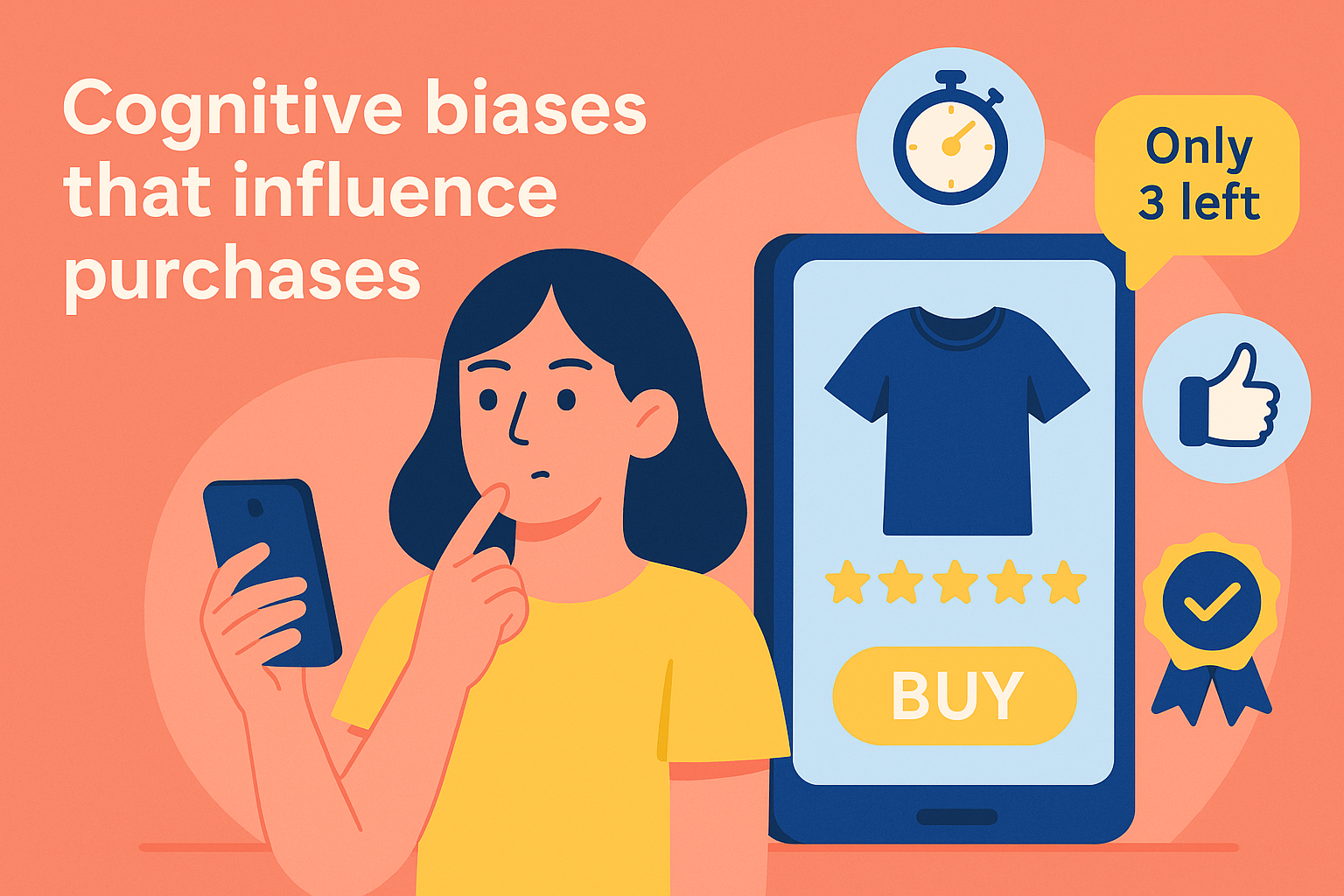
When users make purchases from their mobile devices, they don't do so based solely on logic: their decisions are influenced by mental shortcuts that facilitate or accelerate their choices. These shortcuts—known as cognitive biases—have a profound influence on how we browse, which products we select, and why we complete a purchase from an eCommerce app. Understanding them is key to improving conversion rates and creating more intuitive and human experiences.
In this article, we analyze the cognitive biases that influence mobile purchases, how to apply them ethically, and how to improve your app by following principles validated by mobile user psychology. In addition, we will see how Nora Real Foods, a healthy food company for businesses, applies these principles to increase engagement and sales from its app.
Most mobile decisions are made in seconds. According to Google, 70% of users decide whether or not to buy within the first 5 seconds of interacting with an app. The brain uses cognitive biases to reduce mental load and make decisions faster.
In addition:
Understanding how these biases work allows you to optimize experiences, improve conversions, and enhance user satisfaction.

The brain interprets a scarce product as more valuable. This bias increases the urgency to buy.
According to Nielsen Norman Group, scarcity messages can increase mobile conversion by up to 18%.
If other users choose a product, the brain interprets it as safe and desirable.
Social proof can increase purchase intent by 32% (BrightLocal).
People make decisions based on the first information they receive, such as initial prices or discounts.
A good anchor can increase the average ticket by between 12% and 20%.
The brain trusts experts or recognized entities.
This bias is particularly useful in cosmetics, food, sports, and health.
The user searches for information that validates their initial intention.
The easier it is to navigate, the more "correct" the choice seems.
Apps with high cognitive fluency:
The brain prefers what it knows. If the user recognizes visual patterns or structures, they progress more quickly.
It can be applied by:
Urgency drives quick decisions.
Ethical use of this bias can increase mobile conversion by more than 20%.
The goal is not to manipulate, but to facilitate informed decisions by offering real value.
Users reward honesty: according to Deloitte, brands with ethical UX strategies increase loyalty by 30%.

Nora Real Foods, a healthy food company for businesses, uses cognitive biases ethically to improve the experience and increase purchases within its app.
By applying biases ethically, Nora Real Foods has managed to turn its app into a tool for sales and ongoing customer loyalty.
The most important are scarcity, urgency, social proof, anchoring, cognitive fluency, and familiarity, as they influence the quick decision typical of mobile users.
Using real information, avoiding excessive pressure, showing verifiable data, and applying biases to help users make transparent decisions.
Analyze KPIs such as conversion, recommendation CTR, abandonment, session depth, and A/B test performance on psychological elements.
No: they are more effective in apps because interaction is faster, more emotional, and more tactile, which activates mental shortcuts more intensely.
They increase conversion, average ticket size, trust, and speed in decision-making, improving the entire experience within the app.
Cognitive biases that influence mobile purchases are a powerful tool for improving user experience, increasing conversions, and designing apps focused on how consumers really think and make decisions. Applied ethically and strategically, they allow for the creation of more intuitive, human, and effective experiences. Cases such as Nora Real Foods demonstrate that understanding mobile user psychology not only improves sales but also customer relationships.